20 Most Beautiful Lighthouses in Michigan (2026 Travel Guide)
Last Updated: May 2026
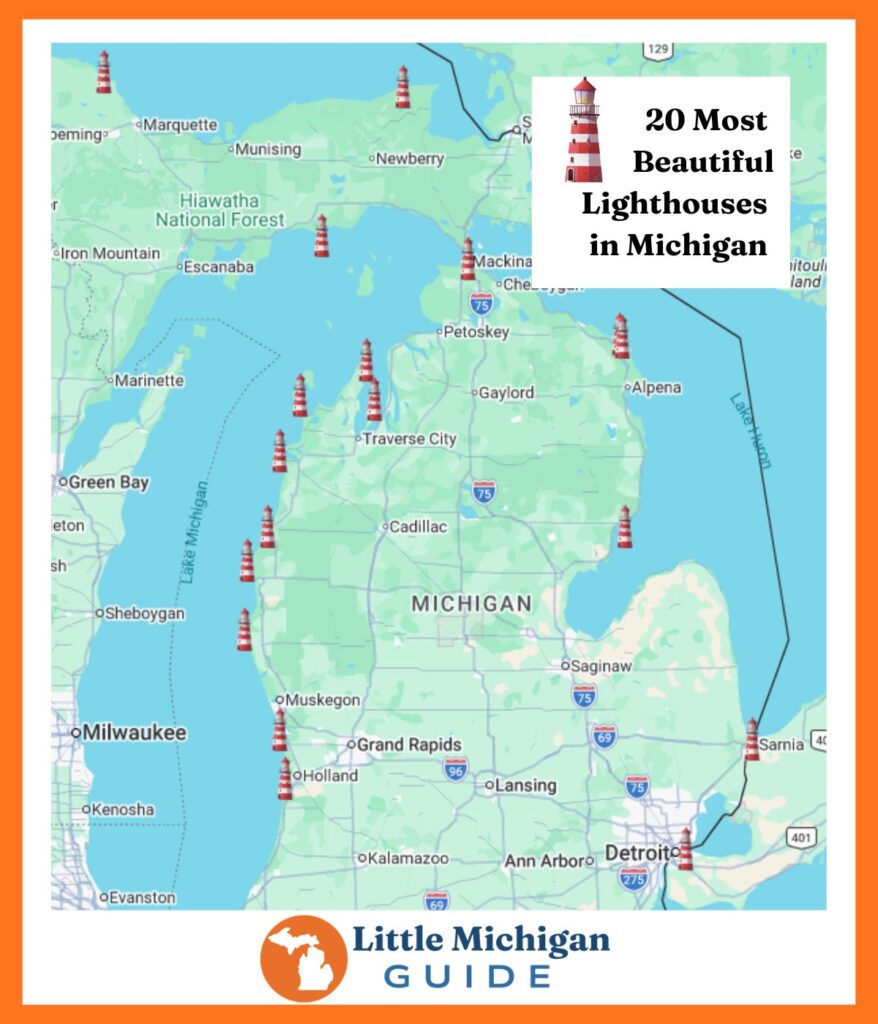
Most Michigan lighthouse road trip guides hand you a single 7-day loop and call it done. That’s a problem, because Michigan has more than 120 lighthouses spread across 3,200 miles of Great Lakes shoreline — and almost nobody planning their first trip has a full week to commit. A West Michigan weekend, a Lake Huron Sunrise Coast circuit, and an Upper Peninsula deep dive are fundamentally different trips with different audiences, lodging, and driving demands. Below are the four regional Michigan lighthouse road trips I send people to, ranked by how much time you actually have.
I’ve been covering Michigan travel as a contributor to WDIV Detroit, FOX 32 Chicago, FOX 17 West Michigan, and FOX 2 Detroit, and my work has appeared in outlets including the Washington Post — and I’ve spent my life driving these coasts, from Big Red as a kid in West Michigan to the unpaved road north to Crisp Point. Each of these routes is built around what the trip actually requires: hours behind the wheel, where to stay, when to go, and which lights are worth the detour versus the ones you can skip without regret.
📌 Michigan Lighthouse Road Trips: In a Nutshell
- Best for a 2-day weekend: West Michigan Lighthouse Loop (Holland to Ludington)
- Best for a 3-day weekend: Lake Huron Sunrise Coast (Port Huron to Alpena)
- Best for 4–5 days: Northwest Michigan + Straits Loop (Traverse City to Mackinaw City)
- Best for 5–7 days (full commitment): Upper Peninsula Lake Superior Loop
- Lighthouses you can sleep in: Big Bay Point (B&B), Whitefish Point (Coast Guard quarters), Big Sable Point (volunteer program)
- Best season: Late May through mid-October — most towers close by Halloween
- What to skip on a short trip: The UP. It’s a separate trip, not a stop.
Why Now / What’s New for 2026
- Pointe aux Barques Lighthouse has expanded summer tour days for 2026 — check the schedule before driving the Thumb.
- Port Huron Museums opens its summer lighthouse tours May 2, 2026 (weekends only); 7-days-a-week schedule begins May 25.
- Harbor Beach Lighthouse opens for summer tours June 13, 2026.
- DeTour Reef Light now offers weeknight overnight keeper stays alongside weekend programs — easier to book than in past years.
Route 1: The West Michigan Lighthouse Loop (2 Days)
This is the loop I recommend for anyone with a single weekend and any starting point in southern Michigan, Chicago, or Indiana. It covers the highest concentration of accessible, drive-up, tower-climb-eligible lighthouses in the state, and it ends each day in a town where you can actually find dinner past 9 p.m.
Route: St. Joseph → Holland → Grand Haven → Muskegon → Ludington (overnight) → Manistee → Point Betsie → return south.
Drive time from Detroit: 3 hours to St. Joseph (start). From Grand Rapids: 45 minutes to Holland. From Chicago: 90 minutes to St. Joseph.
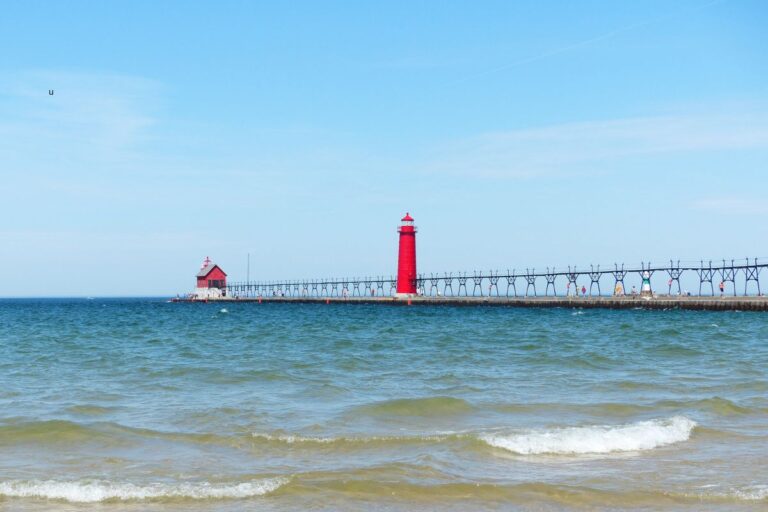
Day 1 anchors: St. Joseph’s twin pier lights (free, year-round, Tiscornia Park), Holland Harbor “Big Red” (Holland State Park — Michigan’s most photographed lighthouse and worth every minute), Grand Haven’s catwalk-and-pier complex (free, walkable, beloved at sunset). End the day in Ludington.
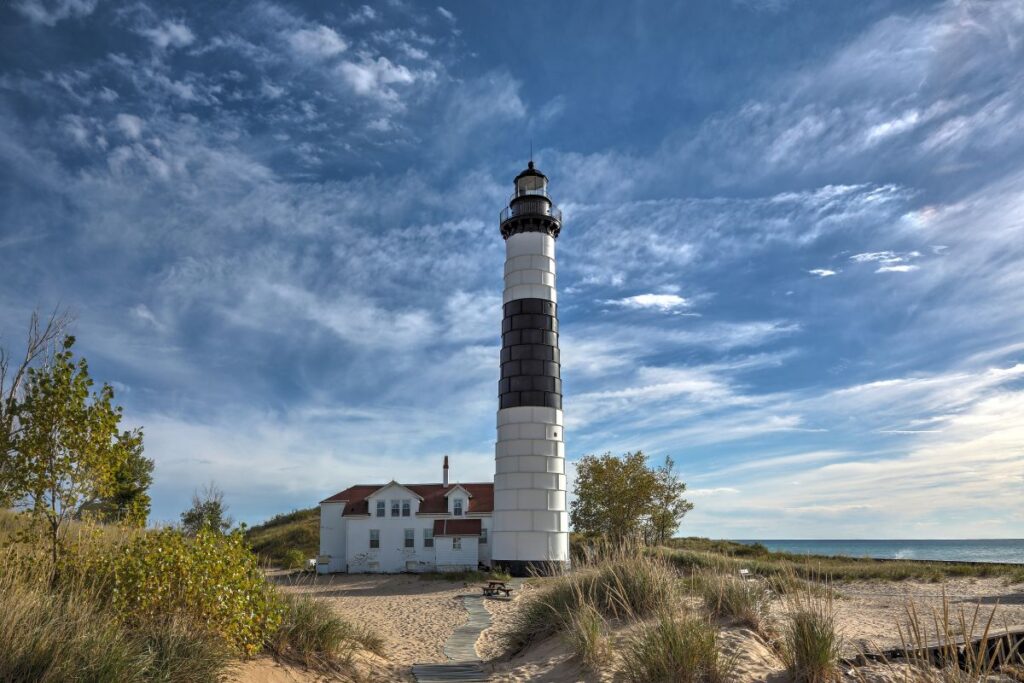
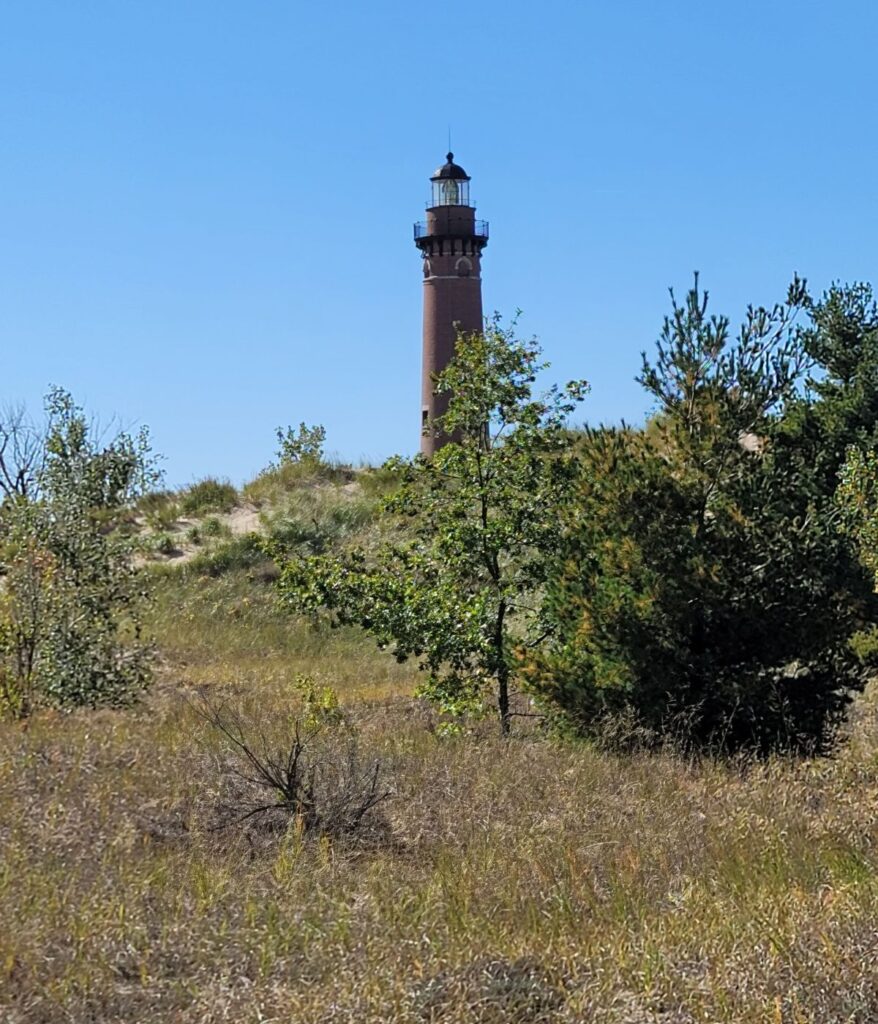
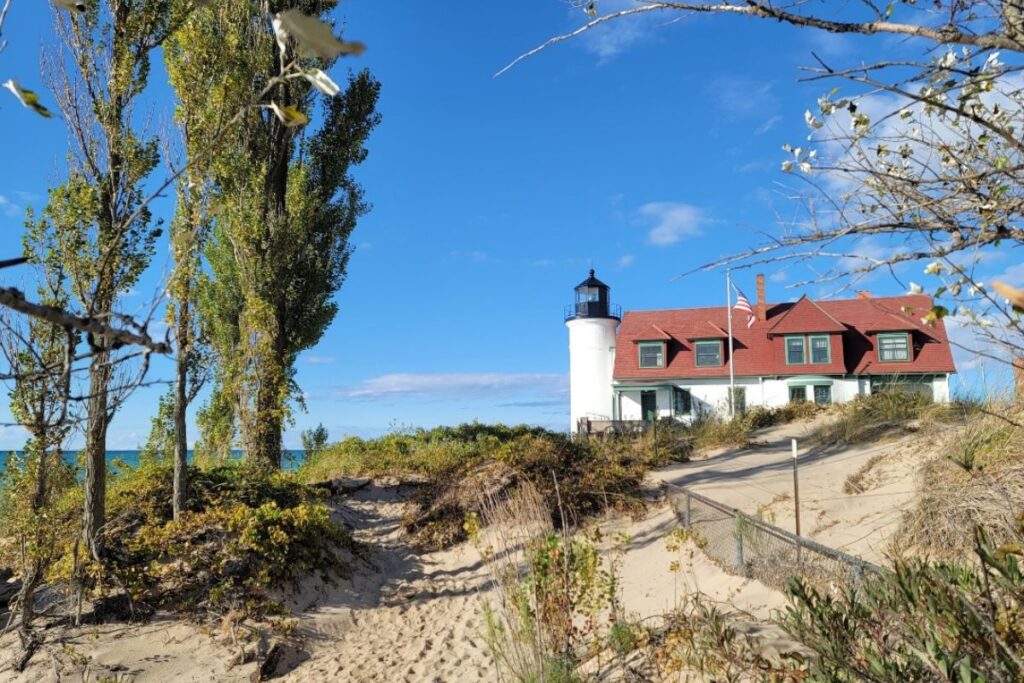
Day 2 anchors: Big Sable Point Lighthouse (1.8-mile walk through Ludington State Park dunes — the climb at the end is the single best lighthouse experience on this loop), Manistee North Pierhead, and Point Betsie near Frankfort before the drive home.
Field Note: Big Sable’s parking lot fills by 10:30 a.m. on summer Saturdays — get there before 9 a.m. or commit to a late-afternoon climb. The 130 steps up the tower are not air-conditioned, and the wait at the top for your turn at the catwalk is part of the experience.
Where to stay: Ludington has the best lodging concentration for an overnight — Pere Marquette Beach rentals on VRBO, or the historic Ramsdell Inn downtown. Holland is the alternative if you want to anchor the trip earlier.
What to skip: White River Light Station near Muskegon is fine but doesn’t earn the detour on a 2-day trip. Save it for a return visit.
Route 2: Lake Huron Sunrise Coast (3 Days)
The Lake Huron coast is what West Michigan was twenty years ago — quieter, less crowded, and underrated. The Thumb especially has been ignored by most Michigan lighthouse roundups, which is exactly why the lights here are still walk-up experiences without parking battles. This route follows US-23 north from Port Huron and adds in the Thumbcoast lights for travelers willing to detour east.
Route: Port Huron → Tawas Point (overnight) → Presque Isle/Alpena → optional Thumbcoast detour (Pointe aux Barques, Port Hope) → return.
Drive time from Detroit: 1 hour to Port Huron (start). From Grand Rapids: 3 hours to Port Huron via I-69.
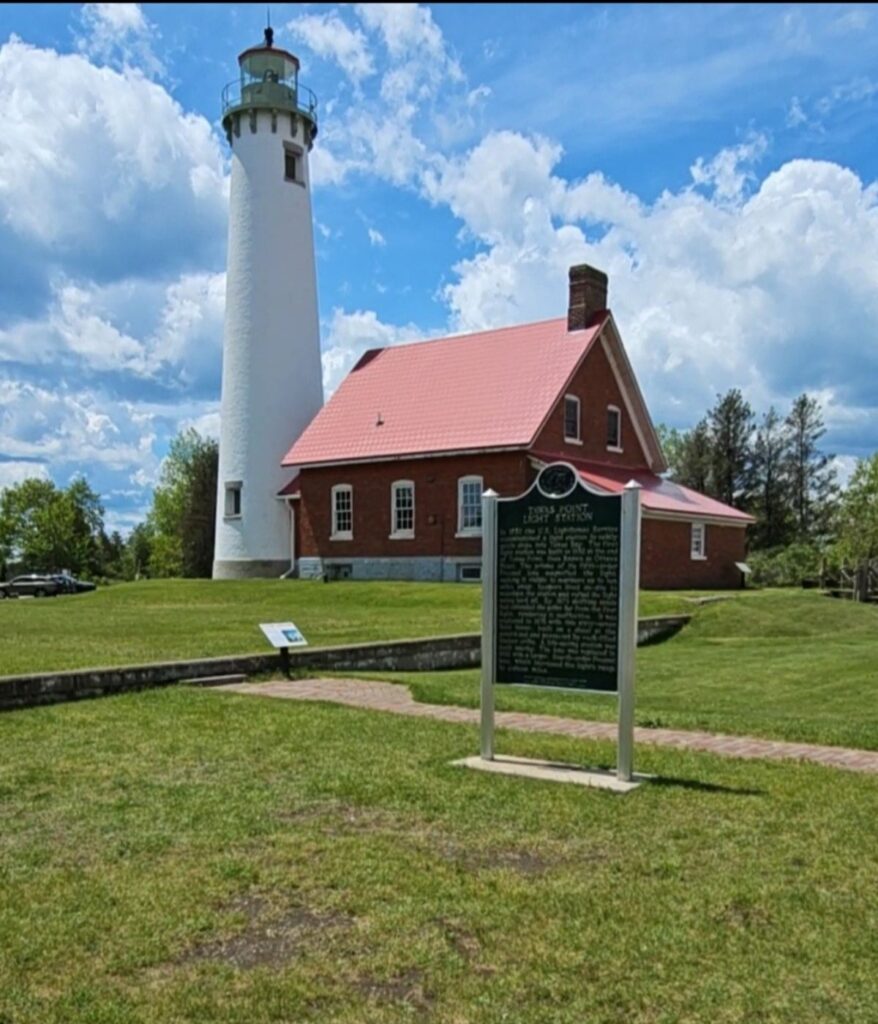
Fort Gratiot Lighthouse in Port Huron is Michigan’s oldest continuously operating lighthouse — first lit in 1825 at the entrance to the St. Clair River. The 96-step iron-stair climb to the catwalk delivers a working-lighthouse view you won’t get at the West Michigan sites, where most lights have been decommissioned. Continuing north on US-23, Tawas Point Lighthouse sits inside Tawas Point State Park on a sandy peninsula that draws over 200 species of migrating birds — if you can time your trip to the Tawas Point Birding Festival in mid-May, you’ll get both birds and a quieter lighthouse.
Day 3 takes you to Alpena’s two Presque Isle lights — the Old Presque Isle (1840, one of the oldest on Lake Huron) and the New Presque Isle (1870). The Old Presque Isle has 113 steps and is open for climbs; the panorama is one of the best on Lake Huron. Both are about 2.5 hours north of Detroit on the Sunrise Coast.
Where to stay: East Tawas has the best mid-route lodging — the Tawas Bay Beach Resort is on the water and the town is walkable for dinner. Alpena works for a second night if you’re hitting Presque Isle.
What to skip: If you only have 2 days instead of 3, drop Alpena and turn back at Tawas. The Presque Isle pair is worth the drive but it’s a real drive — don’t squeeze it.
Route 3: Northwest Michigan + Straits Loop (4–5 Days)
This is the loop for travelers who want the iconic Northern Michigan lighthouse experience — Mission Point, Grand Traverse, Old Mackinac — combined with wine country, Sleeping Bear Dunes, and the Mackinac Bridge crossing. It’s the most scenic of the four routes by a meaningful margin, and the lodging options are the strongest.
Route: Traverse City → Mission Point (Old Mission Peninsula) → Grand Traverse Lighthouse (Northport) → Leland → optional South Manitou Island ferry → Mackinaw City → Old Mackinac Point → optional White Shoal boat tour.
Drive time from Detroit: 4 hours to Traverse City. From Grand Rapids: 2.5 hours.
Mission Point sits at the tip of Old Mission Peninsula at the 45th parallel — exactly halfway between the equator and the North Pole — surrounded by cherry orchards and wineries. The grounds are free year-round and the tower climbs run in summer. This is the only stop on this loop where you can pair a lighthouse climb with serious wine tasting in the same afternoon.
Grand Traverse Lighthouse on the Leelanau Peninsula is one of the most complete lighthouse museum experiences in the state — restored keeper’s quarters, a shipwreck exhibit, a Remote Operated Vehicle visitors can actually drive, and tower climbs with views of Lake Michigan, Cathead Bay, and the Manitou Islands. Plan 90 minutes minimum.
South Manitou Island Lighthouse requires a ferry from Leland and is the most committed stop on this loop — but the 100-foot white tower with its wrought-iron observation deck is one of the most memorable lighthouse experiences in Michigan. The ferry itself is part of the trip, and the island has no cars. Confirm ferry timing before you commit a day to it.
End in Mackinaw City for Old Mackinac Point Lighthouse — sitting just east of the Mackinac Bridge where Lake Michigan and Lake Huron meet. The 1892 structure is now a fully restored museum with costumed interpreters running fog signal demonstrations throughout the day. From Mackinaw City you can also catch private tour boats out to White Shoal — Michigan’s candy-cane offshore lighthouse and the only publicly accessible offshore tower in the state.
Where to stay: Traverse City for the first two nights (Hotel Indigo downtown or a Leelanau cottage on VRBO), then Mackinaw City for the final night before crossing or returning.
Route 4: Upper Peninsula Lake Superior Loop (5–7 Days)
The Upper Peninsula loop is the most rewarding Michigan lighthouse trip in the state — and also the one I tell people to stop trying to squeeze into a long weekend. This is a real commitment: roughly 800 miles of UP driving, five to seven days minimum, and lighthouses that range from drive-up to genuine backcountry. Gas stations get sparse west of Marquette — top off whenever you see a pump.
Route: Cross Mackinac Bridge → Seul Choix Point (Gulliver) → Whitefish Point (Paradise) → Crisp Point (north of Newberry) → Au Sable Light Station (Pictured Rocks) → Marquette Harbor → Big Bay Point (overnight at the B&B).
Drive time from Detroit: 4 hours to Mackinaw City, then add the Bridge crossing plus 2 hours to the eastern UP. From Grand Rapids: 6 hours total to St. Ignace.
Whitefish Point Light Station near Paradise is the most significant single stop on this loop — first lit in 1849, it sits along the stretch of Lake Superior known as the Graveyard of the Great Lakes and houses the Great Lakes Shipwreck Museum (home to the recovered bell from the Edmund Fitzgerald). Plan a full half-day here, not a quick pull-off. Overnight stays in the restored Coast Guard quarters book months in advance.
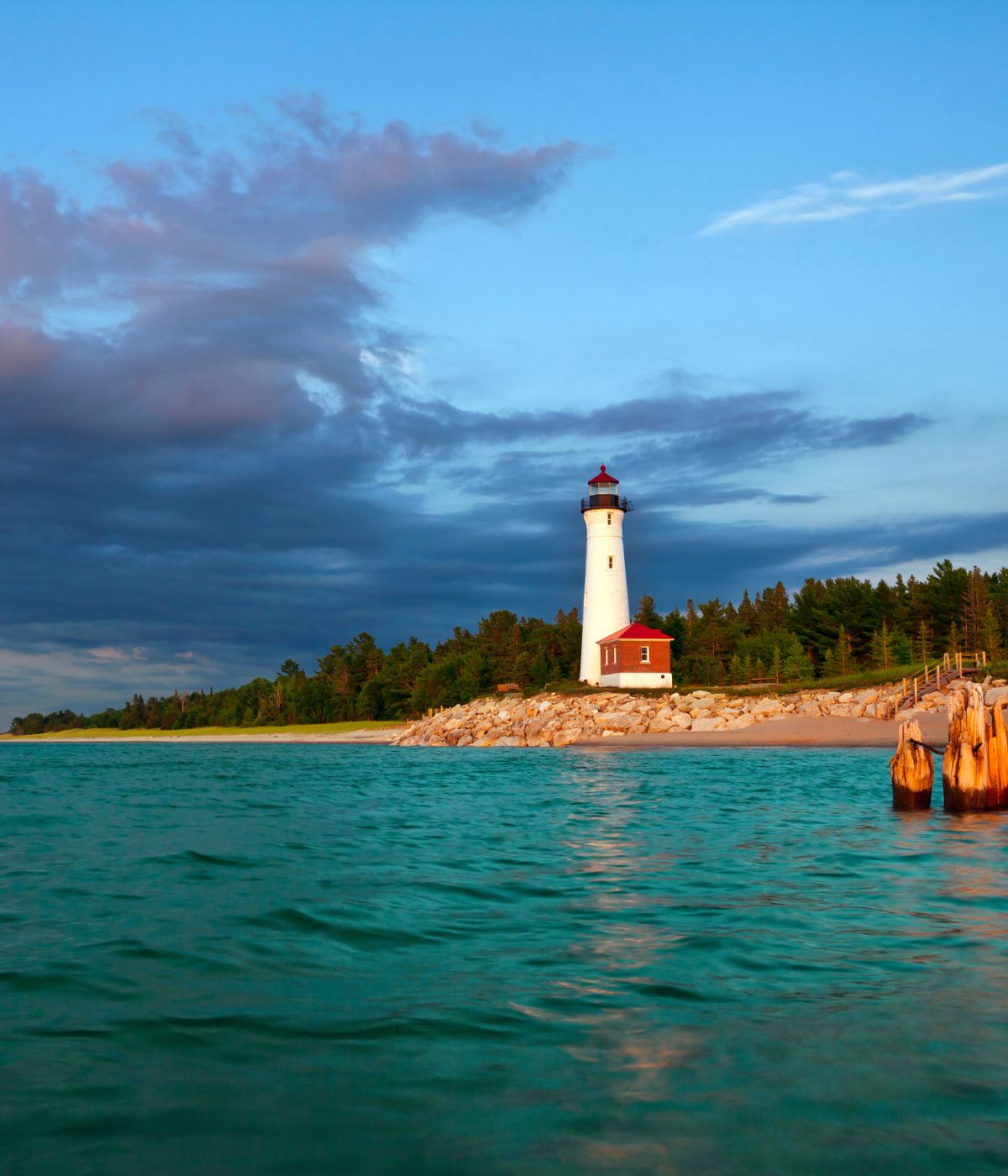
Crisp Point Lighthouse is the most remote lighthouse in Michigan and the one that tells you whether you’re actually a lighthouse person. Reaching it requires 12 miles of unpaved forest road north of Newberry. No facilities, no cell service, no crowds. A high-clearance vehicle is strongly recommended; conditions in spring and fall vary considerably. When you arrive, you’ll find a beautifully preserved 1904 tower standing alone on a wild stretch of Lake Superior shoreline — and an empty parking lot. The effort is the point.
Field Note: Au Sable Light Station inside Pictured Rocks requires a 1.5-mile hike each way from Hurricane River Campground along a flat section of the North Country Trail. The free ranger-led tour at the top is one of the few free tower climbs left in Michigan — but the ranger schedule isn’t published far in advance. Call the Pictured Rocks visitor center the week of your trip to confirm tour days.
Big Bay Point Lighthouse near Marquette is the only lighthouse in Michigan that operates as a full bed and breakfast — seven guest rooms on the Lake Superior cliffs, in one of the most unusual overnight experiences in the Midwest. If you’re going to do the UP loop, end here. If you can’t get a room, the grounds and views from the bluff are still some of the best in the UP and worth the 25-mile drive from Marquette along scenic County Road 550.
What to skip: Anyone telling you the UP can be done as part of a Lower Peninsula loop is selling you a trip you’ll regret. This is its own trip, full stop.
Which Michigan Lighthouse Road Trip Should You Pick?
The right route depends on three things: how much time you have, where you’re starting, and what kind of trip you actually want. Here’s the honest version, after years of doing all four.
| Time | Best Route | Why |
|---|---|---|
| 2 days | West Michigan Loop | Highest density of tower climbs, easiest logistics, best for families |
| 3 days | Lake Huron Sunrise Coast | Quieter crowds, oldest lights, easy from Detroit |
| 4–5 days | Northwest + Straits Loop | Most scenic, best lodging, best food and wine pairing |
| 5–7 days | UP Lake Superior Loop | The big one — only do it if you have the time |
Best Time of Year for a Michigan Lighthouse Road Trip
Late May through Labor Day weekend is the only window where every tower on every loop is fully operational. Most lighthouse interiors close by mid-October, and tower climbs taper off in September. That’s the practical answer.
The better answer: September is the most underrated month for a Michigan lighthouse road trip. Tower climbs are still running at most sites through mid-month, crowds drop sharply after Labor Day, and shoreline color starts turning by the third week. Point Betsie and Mission Point are particularly striking in September.
Winter is a different trip entirely. St. Joseph, Grand Haven, and Point Betsie all freeze dramatically when temperatures drop and lake winds kick up — but you’re seeing the lights from the pier, not climbing the towers. If frozen lighthouse photography is the goal, follow the lighthouses’ social media accounts for ice conditions and dress for genuine cold.
Pro Tip: Many Michigan lighthouse sites only accept cash for admission, and several only announce summer opening dates a few weeks out. Check each individual lighthouse website the week of your trip — especially for UP and Lake Huron lights where a closed site means a long drive for nothing.
Frequently Asked Questions
How long does it take to do a Michigan lighthouse road trip?
Michigan lighthouse road trips can be done in as little as 2 days for a regional loop. A West Michigan or Lake Huron weekend covers 6–8 lighthouses in 2–3 days. The full Lower Peninsula loop takes 5–7 days. The Upper Peninsula loop is its own 5–7 day trip and shouldn’t be combined with the Lower Peninsula in a single week.
Can you stay overnight in a Michigan lighthouse?
Yes. Big Bay Point Lighthouse near Marquette operates as a bed and breakfast with seven guest rooms. Whitefish Point Light Station near Paradise offers overnight stays in restored Coast Guard quarters — book well in advance. Big Sable Point Lighthouse in Ludington runs a two-week volunteer Lighthouse Keeper Program each summer where participants live at the lighthouse.
Which Michigan lighthouse road trip is best for families?
The West Michigan Lighthouse Loop is the best family option — shorter drive times, lots of state park beaches for kids to swim, tower climbs that older children can handle, and walkable downtowns in Holland, Grand Haven, and Ludington for dinner and ice cream. Holland State Park (Big Red) and Ludington State Park (Big Sable) are the two strongest family anchors.
What’s the most remote lighthouse in Michigan?
Crisp Point Lighthouse north of Newberry in the Upper Peninsula is the most remote — reached by 12 miles of unpaved forest road with no facilities on site. A high-clearance vehicle is recommended. Au Sable Light Station inside Pictured Rocks National Lakeshore requires a 1.5-mile hike each way from Hurricane River Campground. Both are free and open seasonally but require real planning.
Are dogs allowed on Michigan lighthouse road trips?
Most Michigan lighthouses inside state parks allow leashed dogs on grounds and adjacent beaches — Holland State Park, Grand Haven State Park, Tawas Point State Park, Ludington State Park, and Belle Isle State Park all welcome leashed dogs. Tower interiors and museum buildings generally do not allow pets. Confirm individual policies before each stop as rules vary seasonally.
Can you climb the lighthouses on these road trips?
Many but not all. Big Sable Point, Point Betsie, Mission Point, Grand Traverse, Little Sable, Fort Gratiot, Old Mackinac Point, Tawas Point, and Old Presque Isle all open their towers for climbs seasonally (typically Memorial Day through Labor Day). Holland’s Big Red and the St. Joseph and Grand Haven pier lights are exterior-view only. Big Bay Point is open only to overnight B&B guests.