Visiting Detroit for the First Time: Everything You Need to Know (2026)
Last Updated: May 16, 2026
Detroit is one of the most misunderstood cities in America — and that misunderstanding works in your favor as a first-time visitor. The narrative of decline that defined Detroit’s reputation for decades has not kept pace with what the city actually looks like right now. Michigan Central Station, a beaux-arts train station that stood as a symbol of Detroit’s collapse for 30 years, has been spectacularly restored by Ford at a cost of $950 million and is now an innovation campus with a soaring public hall. Corktown and Midtown have restaurant scenes that would be impressive in any American city. The Detroit Institute of Arts is genuinely one of the five best art museums in the country. After covering Michigan travel for over a decade, I find Detroit consistently produces the most significant revision in expectations of any destination in the state. Here is everything you need to know before your first visit.
📌 First-Time Detroit Visitor: In a Nutshell
- Do not miss: Detroit Institute of Arts (Rivera murals), Eastern Market Saturday, Michigan Central Station, Detroit Riverwalk
- Best neighborhood to stay: Downtown for convenience · Midtown for museums · Corktown for character
- Getting around: Rideshare + walking within neighborhoods · QLine on Woodward · People Mover downtown loop
- What surprises first-time visitors: The quality of the restaurant scene, the scale of the architectural heritage, and how much the downtown has genuinely changed
- Important 2026 note: Motown Museum tours paused through Spring 2027 for expansion — verify at motownmuseum.org
- Best time to visit: May through October — full outdoor season, baseball, Eastern Market at peak
- Drive times to Detroit: Grand Rapids (2.5 hrs) · Chicago (4.5 hrs) · Cleveland (2.5 hrs) · Toronto (4 hrs)
What Detroit Is Actually Like Right Now
The Detroit that most Americans carry in their mental image — the ruins, the abandoned factories, the cautionary tale — is a real part of the city’s history but an increasingly incomplete picture of its present. The downtown core has received billions in private investment over the past decade. Gilbert’s Bedrock real estate has transformed multiple city blocks. Ford’s Michigan Central restoration has anchored a complete Corktown neighborhood revival. Midtown’s cultural corridor — the DIA, the Wright Museum, the Michigan Science Center, Wayne State University — never declined and has continued to strengthen. The Eastern Market district has become one of the most vibrant food and arts economies in the Midwest.
What has not changed: Detroit remains a large American city with real disparities between neighborhoods. The areas described in this guide are all appropriate for visitors. Outside those areas, the picture is more complicated — but first-time visitors spending two to three days on a standard itinerary will encounter none of that complexity in the neighborhoods covered here.
The Detroit Neighborhoods First-Time Visitors Should Know
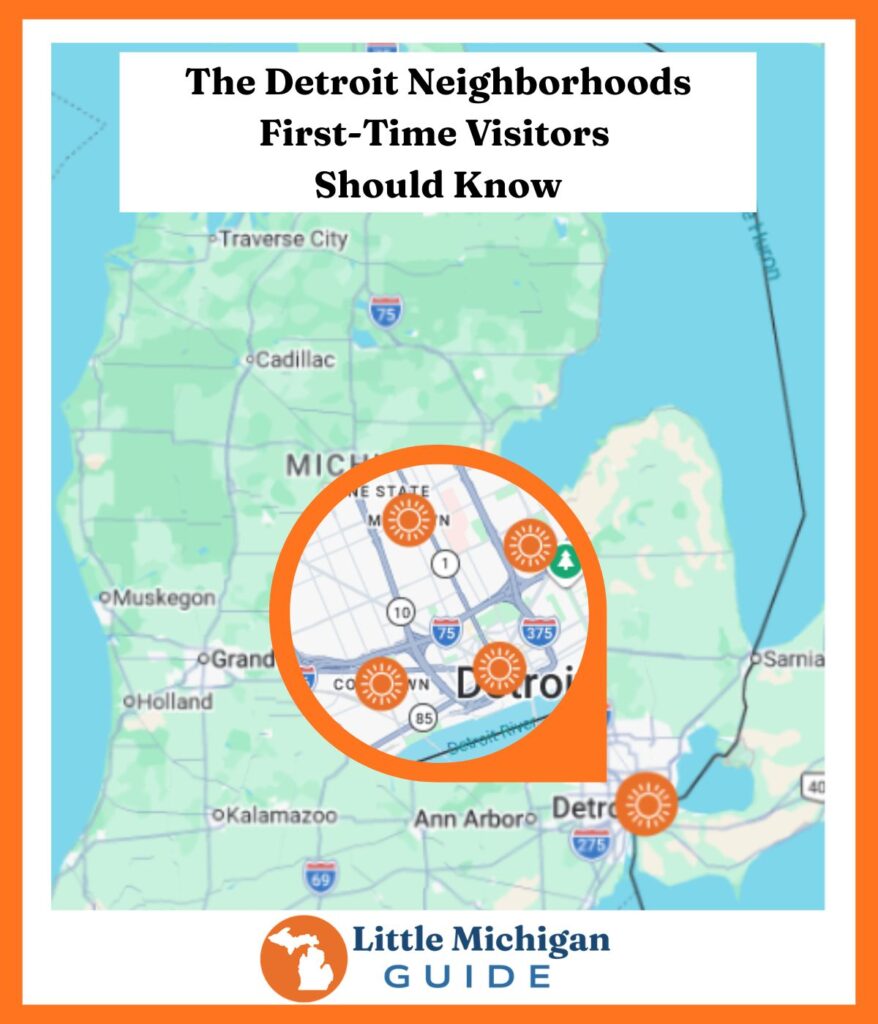
Downtown
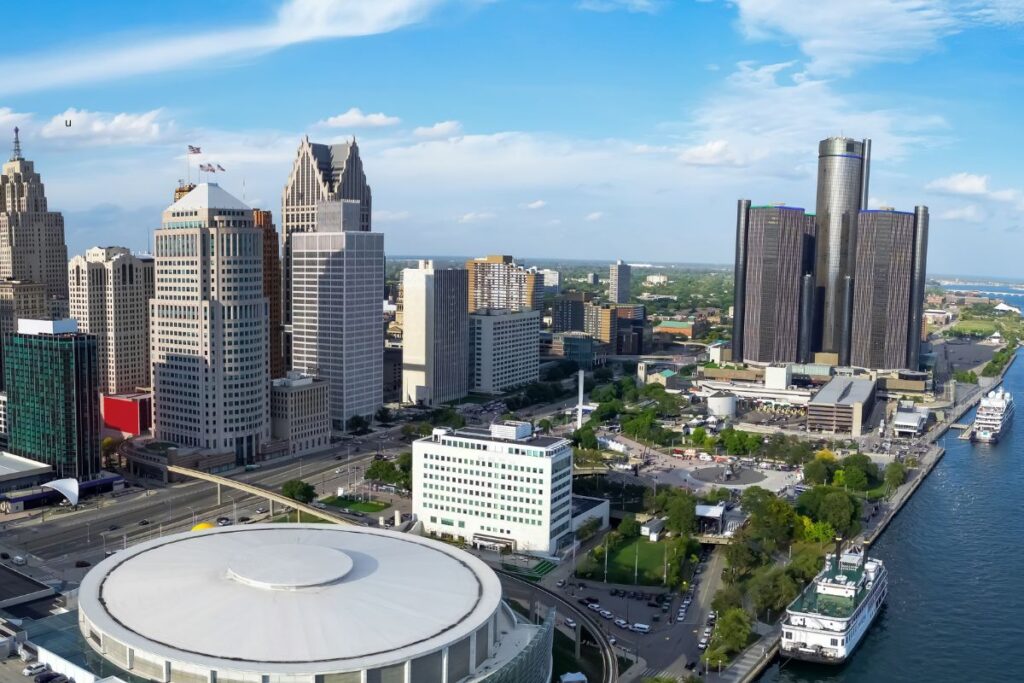
Downtown Detroit is where the People Mover loop, the Riverwalk, Campus Martius, Comerica Park, Ford Field, the Fox Theatre, and most major hotels are concentrated. It is the most convenient base for a first visit — walkable between most major landmarks, served by the People Mover light rail at 75 cents a ride, and well-supplied with hotels at every price point. The Guardian Building, Penobscot Building, and Book Cadillac Hotel are three of the most architecturally significant buildings in a downtown that has more intact early 20th-century commercial architecture than almost any American city.
Midtown
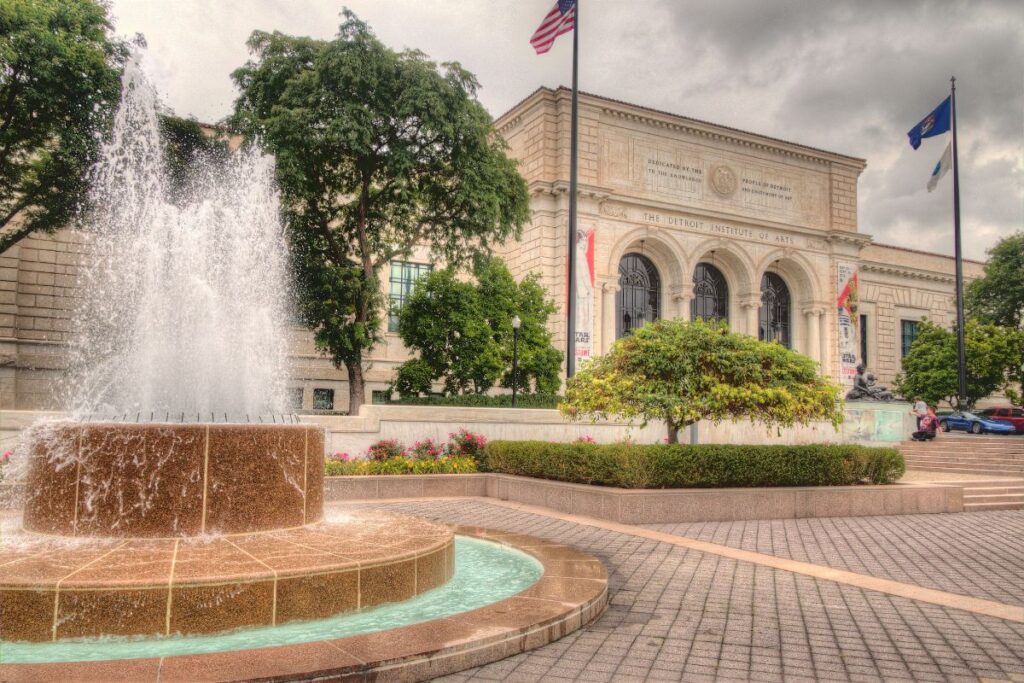
Midtown is Detroit’s cultural heart — the Detroit Institute of Arts, the Charles H. Wright Museum, the Michigan Science Center, Wayne State University, and the Detroit Historical Museum are all within walking distance of each other in what the city calls the Cultural Center. Midtown also has the highest concentration of independent restaurants and coffee shops in Detroit — the Cass Corridor (now broadly called Midtown), Forest Park, and the New Center area have driven the city’s food revival as much as Corktown. The Inn on Ferry Street boutique hotel is the best accommodation option in the neighborhood.
Corktown
Corktown is Detroit’s oldest neighborhood and its most exciting right now. Michigan Central Station anchors the western end. The Michigan Avenue corridor between 14th and 18th streets has the best restaurant concentration in the city — Takoi, Gold Cash Gold, Batch Brewing, and a dozen other independent operators have made Corktown the destination that national food media writes about when it covers Detroit. The neighborhood has genuine history — Irish immigrants settled here in the 1840s, and the working-class character persisted through Detroit’s industrial decades before the current revival. The Trumbull and Porter hotel is the neighborhood’s boutique accommodation option.
Eastern Market
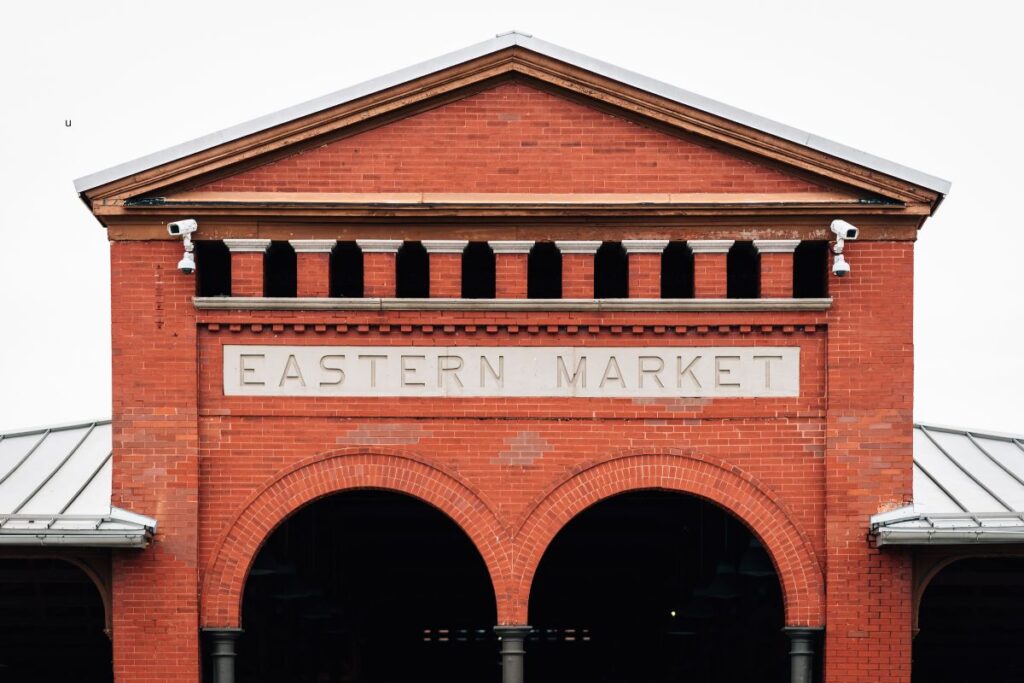
Eastern Market is less a neighborhood than a district organized around the oldest continuously operating public market in the city — but the surrounding area has developed into one of Detroit’s most interesting creative communities. The murals covering the buildings around the market sheds are some of the most significant public art in Michigan. The Saturday market is the main event — 250+ vendors from April through December. The surrounding blocks have restaurants, coffee shops, and studios that make it a full-day destination on market days.
The Essential First-Time Detroit Itinerary
Day 1 — The Cultural Core
Morning: Detroit Institute of Arts — plan two to three hours minimum. Start in the Rivera Court. Wayne, Oakland, and Macomb county residents enter free. Out-of-county visitors pay approximately $20. Closed Mondays.
Afternoon: Charles H. Wright Museum of African American History — directly adjacent to the DIA, the world’s largest museum dedicated to African American history and culture. Plan 90 minutes to two hours.
Evening: Corktown — Michigan Central Station for the architecture, then dinner on the Michigan Avenue corridor. Takoi for creative cuisine. Gold Cash Gold for local sourcing. Batch Brewing for craft beer in a converted building with serious food.
Day 2 — The River, the Market, and the Architecture
Morning: Eastern Market — Saturday only for the full experience, 250+ vendors from 6am. If visiting on another day, Eastern Market’s permanent vendors are open Tuesday through Friday but the atmosphere is significantly different.
Mid-morning: Detroit Riverwalk — 5.5 miles along the Detroit River from Hart Plaza west to the east side. The view across the river to Windsor is one of the best urban waterfront perspectives in the Midwest.
Afternoon: Guardian Building and downtown architecture — the Cathedral of Finance at 500 Griswold Street is open to the public during business hours and has the most extraordinary art deco interior in Michigan. The two-block radius around Campus Martius contains more significant architecture per block than almost any American city.
Late afternoon: Belle Isle — the island state park in the Detroit River with beach access, the free Belle Isle Aquarium, and the best views of the Detroit skyline available anywhere.
Day 3 (Optional) — Dearborn
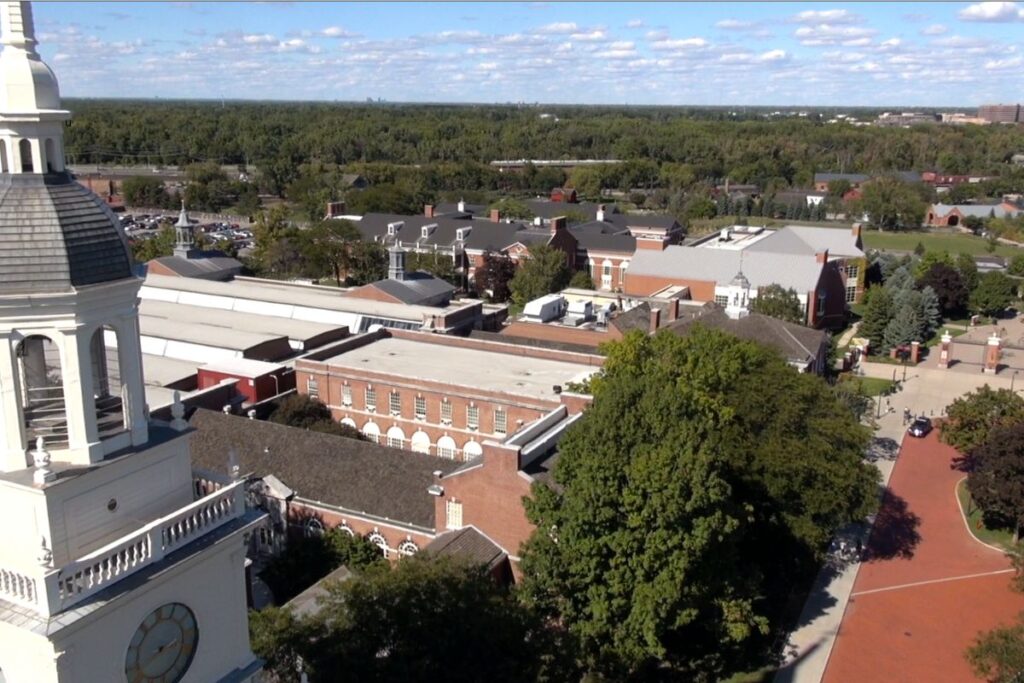
Add a third day for Dearborn — the Henry Ford Museum of American Innovation and Greenfield Village together constitute one of the most significant museum complexes in the United States, and neither can be properly experienced in under four hours. Allow 6–8 hours for the full Henry Ford experience including both the museum and the outdoor village. The Arab American National Museum on Michigan Avenue in Dearborn adds a genuinely distinctive cultural experience to a Dearborn day.
What First-Time Visitors Get Wrong About Detroit
Expecting ruins tourism
The abandoned building photography that dominated Detroit’s media coverage for a decade is not the city’s primary narrative anymore — and treating it as such misses what Detroit actually is. Michigan Central Station went from ruin to innovation campus. The Packard Plant site continues to develop. The city’s architectural heritage is being restored block by block. Visitors who come looking for decay will find pockets of it in outer neighborhoods but will miss the more interesting story of what is being built.
Underestimating the restaurant scene
Detroit’s food scene is routinely underestimated by visitors who expect industrial Midwest mediocrity. Corktown, Midtown, and Eastern Market have independent restaurant quality that competes with Chicago, Nashville, and other cities that get far more food media attention. The Middle Eastern and Lebanese food in Dearborn is genuinely some of the best in the country. Eastern Market’s Saturday vendors include producers and prepared food at a quality level that reflects the city’s serious food culture.
Skipping the architecture
Detroit’s early 20th-century commercial architecture is among the most significant in the United States — the Guardian Building, Penobscot Building, Fisher Building, Book Cadillac Hotel, and Fox Theatre all within blocks of each other represent a concentration of art deco and beaux-arts building that no other American city can match at this scale. Most visitors walk past these buildings without looking up. The self-guided architecture walking tour from Visit Detroit is the best framework for understanding what you are seeing.
Getting to Detroit
Detroit Metropolitan Wayne County Airport (DTW) is 20 miles southwest of downtown — approximately 30 minutes by car or rideshare without traffic. DTW is a major hub with direct flights from most US cities and international connections. By car, Detroit is approximately 2.5 hours from Grand Rapids via I-96, 4.5 hours from Chicago via I-94, 2.5 hours from Cleveland via I-80/I-90, and 4 hours from Toronto via the Ambassador Bridge and Highway 401.
Getting Around Detroit
Detroit is designed for cars — which is not surprising given its history — but first-time visitors staying downtown can navigate the city effectively without one. The People Mover is a 2.9-mile elevated rail loop around the downtown core with 13 stations, operating seven days a week for 75 cents per ride. The QLine streetcar runs along Woodward Avenue from downtown to the New Center area — useful for the DIA-to-downtown corridor. Rideshare is the practical choice for Corktown, Belle Isle, Eastern Market, and most destinations outside the downtown-Midtown corridor. Detroit is flat and walkable within neighborhoods, but the distances between neighborhoods require transportation.
Where to Stay in Detroit
The Shinola Hotel (downtown) — Detroit’s most celebrated independent luxury property, named for the Michigan brand, 129 rooms, strong local character. The Westin Book Cadillac (downtown) — 1924 Renaissance Revival landmark, 453 rooms, the most historically significant hotel in the city. The Inn on Ferry Street (Midtown) — four Victorian houses in the historic Brush Park neighborhood, boutique scale, DIA walking distance. Trumbull and Porter (Corktown) — the neighborhood boutique option, most character per dollar, best access to Corktown restaurants.
Frequently Asked Questions: Visiting Detroit for the First Time
Is Detroit worth visiting?
Yes — Detroit is one of the most genuinely surprising cities in America for first-time visitors. The DIA is world-class. Michigan Central Station’s restoration is spectacular. Corktown and Midtown have creative energy and restaurant quality that rivals cities twice the size. Eastern Market on Saturday is one of the best market experiences in the Midwest. Most visitors who expect decline arrive and find revival.
What is Detroit known for?
Detroit is known primarily for the automotive industry — Ford, GM, and Chrysler were all founded here, earning it the Motor City nickname. Motown Records, founded by Berry Gordy in 1959, created a musical legacy that reshaped American pop culture. Detroit also has one of the top five art museums in the United States, significant early 20th-century architecture that rivals any American city, and a revival story that has attracted national and international attention.
How many days do you need in Detroit?
Two days covers the core downtown and Midtown experiences — DIA, Eastern Market, Riverwalk, Corktown, and Belle Isle. Three days adds Dearborn (Henry Ford Museum and Greenfield Village) and more neighborhood exploration. Four or more days allows for day trips to Ann Arbor, Frankenmuth, or Windsor Canada alongside the city.
Is the Motown Museum open in 2026?
No — the Motown Museum paused guided tours at Hitsville U.S.A. on January 20, 2026 for a $75 million expansion project. The expanded 50,000-square-foot campus is expected to open in Spring 2027. The campus store remains open for merchandise. Verify current tour status at motownmuseum.org before planning.
Explore More Southeast Michigan
48 Hours in Detroit: A Local’s Weekend Plan